
Project Overview
A Boy Called Porro is a dual-language audiobook produced by Tricolore Theatre Company and was broadcast on Radio Maria England upon release and the full audiobook is set to be published on Audible.
A Boy Called Porro represented the most technically demanding project to date and involved full responsibility for studio selection and operations, recording direction, sound design, post-production, and asset delivery. This included:
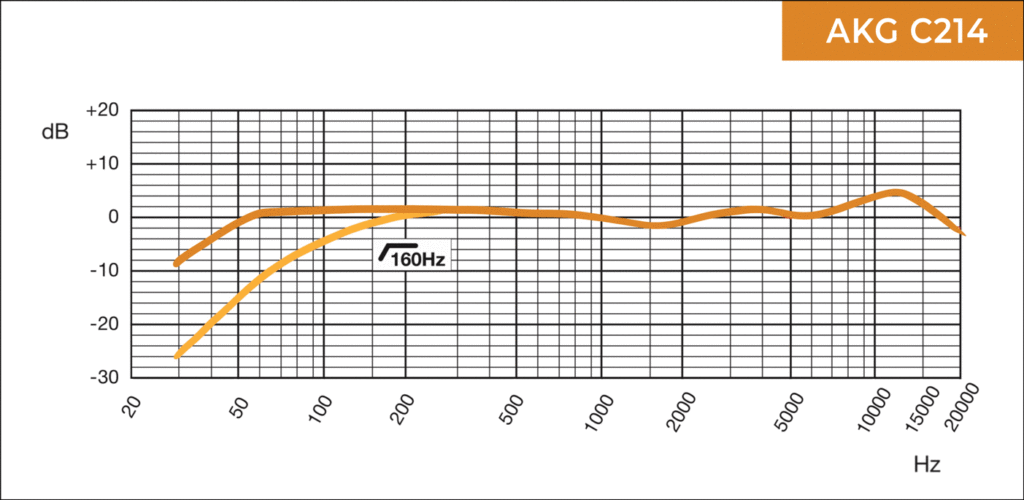
Pre-Production – selecting a recording environment, microphones [2x AKG C414 for their airy and predictable frequency response], configuring recording software [Reaper for importable customisation, granular control and cross-platform support] and leading recording sessions. The studio’s control room, live-room and documentation (scripts, itenary etc.) had to be prepared before the actors arrived to ensure we could maximise recording time.
Production – ensuring foldback and talkback for directors and actors, ensuring high-fidelity, multitrack recordings and listening critically for any unwanted artifacts. The director set a guideline of recording three chapters a session, folders and session files were organised ahead of schedule to ensure efficiency.
Post-Production – organising extensive audio data, sourcing sound effects, and editing multitrack recordings into a <2 hour, seven chapter audiobook. Editing and mastering was to be done in Reaper: the DAW powerfully integrates custom macros and mastering suites to optimise workflow; while any original sound design and effects would be created with Ableton Live.
Dialogue and sound design were mixed and compiled into final masters to suit both Audible’s (ACX) and European broadcast’s (EBU R128) standards.
Challenges
The studio’s acoustic environment presented ongoing noise management difficulties. Performers portraying multiple characters often resulted in overlapping dialogue takes, unintended vocal bleed, coughing, or audible emotional breaks. These issues required careful editorial intervention to isolate usable material for final assembly.
Due to time pressures, it was not feasible to perform detailed corrective recording during sessions through punch-ins or live edits. Instead, editorial reconstruction was completed almost entirely during post-production.
The scale of the project also created logistical challenges. Managing, transferring, and archiving large volumes of data safely within deadline constraints required a reliable and systematic workflow. The production generated several hundred hours of audio recordings across numerous sessions, with actors frequently performing multiple and overlapping roles within the same session.
Workflow and Techniques
Microphone choices and DAW configurations were designed to prioritise vocal clarity and reduce background interference wherever possible. During recording sessions, actors were guided toward performance methods that minimised acoustic bleed while preserving emotional authenticity to great effect.
Post-production focused on detailed dialogue editing, including separation of overlapping takes, removal of unintended artefacts, and selective noise attenuation. This allowed performances to remain natural without compromising intelligibility. In addition to sound effects and design, original music and scoring had to be overlayed intermittently. Use of dynamic processing ensured dialogue was preserved throughout.
To manage the data load, I implemented strict file organisation systems involving templated folder structures, consistent naming conventions, and multi-location backups. Audio files were compressed appropriately for transfer, with delivery secured through both physical back-ups, cloud storage platforms and email transmission to ensure redundancy and deadline compliance.
Outcome and Learning
The project was delivered to technical and creative specifications despite the limitations imposed by studio noise, time restrictions, and data scale. A Boy Called Porro greatly expanded my capacity for technical leadership, studio direction, and advanced post-production problem solving. It demonstrated my ability to balance performance authenticity with editorial precision in complex, high-pressure production environments while maintaining reliable delivery workflows.